Texas Department of Insurance Regulations: Standard Bounce Houses vs Combo Units
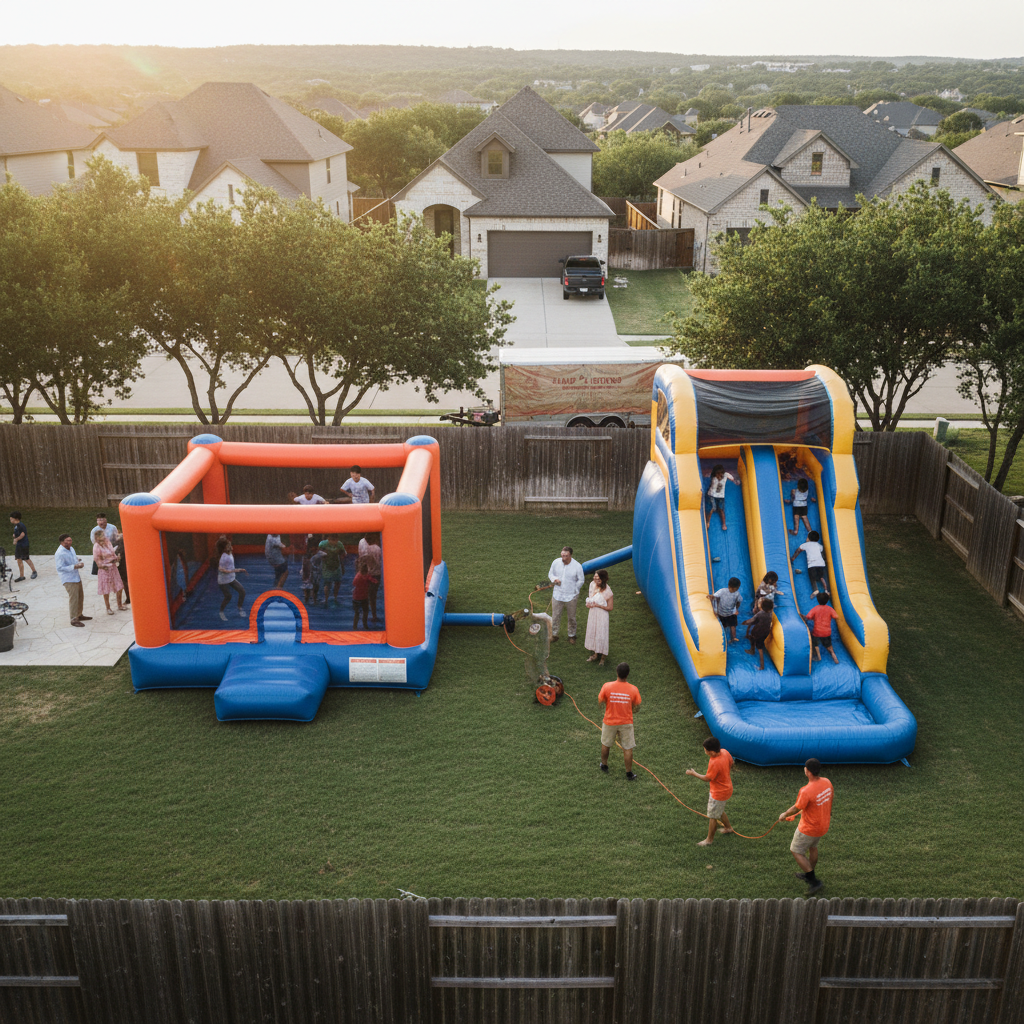
Texas Department of Insurance Compliance Update: Understanding Regulatory Classifications for Bounce Houses vs Combo Units
Recent updates to Texas Department of Insurance (TDI) Amusement Ride Safety program documentation have clarified the distinct regulatory pathways for standard bounce house rentals versus multi-element combo units. Jump Around Party Rentals has navigated these regulatory frameworks since 2008, maintaining full compliance across all inflatable categories in our Austin-area operations.
Regulatory Classifications Under Texas Department of Insurance Standards
The Texas Department of Insurance Amusement Ride Safety program categorizes inflatables based on structural components and operational requirements. Standard bounce houses fall under Section 421.015 as single-function entertainment devices, requiring annual inspection documentation focused on bounce surface integrity, anchor point specifications, and egress accessibility. Our team tracks inspection cycles for over 40 bounce houses annually through TDI's digital reporting system.
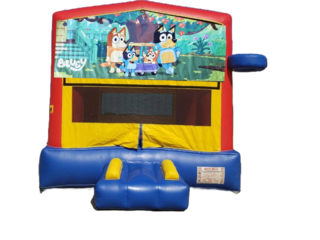
Combo bounce house units receive classification under Section 421.016 due to multiple entertainment elements within a single structure. These units require additional documentation for slide angles, climbing wall materials, and multi-zone capacity calculations. At Jump Around Party Rentals, we maintain separate compliance folders for each combo unit, including the LOL bounce house combo and Fall Theme combo, tracking their enhanced inspection requirements.
Operational Safety Protocol Differences
Standard bounce houses operate under simplified supervision guidelines requiring one trained attendant per 15 children, with basic safety briefing documentation. The regulatory burden focuses on proper setup procedures and weather monitoring protocols. We've found that bounce houses typically pass annual inspections with minimal maintenance beyond regular cleaning and anchor point verification.
.jpg)
Combo units require enhanced operational protocols due to their multi-zone design. TDI regulations mandate separate capacity limits for bounce areas versus slide sections, with documented age separation procedures. Our Cars combo bounce house requires three separate capacity placards under current regulations - one for the bounce chamber, one for the slide platform, and one for the climbing area.
The regulatory framework also addresses wet-dry combo configurations differently. Units like our wet-dry combo bounce house must meet additional water safety standards including drainage specifications, slip-resistant surface requirements, and electrical safety protocols for water-adjacent operations.
Insurance Coverage and Liability Requirements
Texas Department of Insurance regulations directly impact liability coverage requirements for rental operations. Standard bounce houses require commercial general liability minimum of $1 million per occurrence, with specific exclusions for unsupervised use and improper setup. Our insurance documentation shows that bounce houses generate fewer claims due to their straightforward operational nature.


Combo units trigger enhanced insurance requirements under TDI guidelines. Multi-element structures require $2 million aggregate coverage due to increased exposure from multiple activity zones. Insurance carriers review combo unit inspection records more frequently, requiring quarterly documentation of safety protocols and maintenance records.
The regulatory distinction affects customer liability as well. Event hosts renting standard bounce houses receive simplified safety briefing requirements, while combo unit rentals require documented acknowledgment of multi-zone supervision responsibilities. We provide compliance-ready documentation for both scenarios, ensuring Austin families meet their regulatory obligations.
Setup and Inspection Compliance Procedures
TDI regulations specify different setup documentation requirements for each inflatable type. Standard bounce houses require basic anchor point photography, inflation pressure verification, and perimeter clearance measurement. Our setup crews complete these requirements in approximately 15 minutes using standardized checklists.
Combo units require expanded setup documentation including individual zone testing, multi-point anchor verification, and separate safety equipment placement for each activity area. Setup time extends to 30-45 minutes due to enhanced documentation requirements. Each combo unit receives zone-specific safety signage placement according to TDI specifications.
Annual inspection procedures also differ significantly. Standard bounce houses undergo streamlined inspections focusing on surface integrity and basic structural components. Combo units face expanded inspections covering each entertainment element separately, often requiring multiple inspection appointments to address all regulatory checkpoints.
Compliance Verification Checklist for Austin Event Hosts
When selecting between bounce houses and combo units, Austin families should verify specific regulatory compliance elements with their rental provider. Request current TDI inspection certificates showing individual unit compliance status. Standard bounce houses should display single inspection tags, while combo units require multiple zone certifications.
Confirm insurance documentation matches the inflatable type being rented. Standard units require basic commercial coverage verification, while combo units need enhanced policy documentation. Jump Around Party Rentals provides compliance-ready insurance certificates for all unit categories, simplifying the verification process for event hosts.
Review setup crew certification requirements. TDI regulations require documented training for multi-element combo setup procedures, while standard bounce houses allow broader crew certification. Our no-subcontractor policy means all setup personnel maintain current TDI training regardless of unit type.
Frequently Asked Questions
What specific Texas Department of Insurance documentation should I request from my rental company?
Request current annual inspection certificates, commercial liability insurance verification, and crew training documentation. Combo units require additional zone-specific certifications that standard bounce houses don't need.
How do TDI regulations affect my event planning timeline?
Standard bounce houses typically require 2-3 days advance booking for compliance documentation preparation. Combo units may need 5-7 days due to enhanced paperwork requirements and setup crew scheduling.
Are there different age restrictions for combo units under Texas regulations?
Yes, TDI guidelines require documented age separation procedures for combo units with multiple activity zones. Standard bounce houses operate under simplified age grouping requirements.
What happens if weather affects my rental during the event?
Both unit types follow identical TDI weather protocols requiring shutdown at sustained winds over 25 mph. However, combo units have additional requirements for securing multiple zones and safety equipment.
How do municipal permits differ between bounce house types in Austin?
Austin city permits typically treat both types identically for residential events. Commercial venues may require enhanced documentation for combo units due to their multi-zone operational requirements.
Understanding these regulatory distinctions helps Austin families make informed decisions while ensuring full compliance with Texas Department of Insurance requirements. Our experience maintaining state-inspected inflatables across both categories provides the regulatory expertise and documentation support that Austin families deserve for their special events.
📅 Upcoming Events & Webinars
Stay updated with our latest Bounce House vs Combo Bounce House events, workshops, and industry insights.
View Our Calendar →Related Resources
- Jump Around Party Rentals - Expert Resource
- Bounce House vs Combo Bounce House Data & Analysis
- Bounce House vs Combo Bounce House Presentation
- Jump Around Party Rentals Official Page
- Bounce House vs Combo Bounce House Events
- Bounce House vs Combo Bounce House Resources
- Bounce House vs Combo Bounce House Blog Post
- Bounce House vs Combo Bounce House Service Area Map

Comments
Post a Comment