The Inflatable Safety Detective: How to Vet Central Texas Rental Companies
Beyond the Bounce: Comprehensive Inflatable Safety Checklists for Central Texas Parents
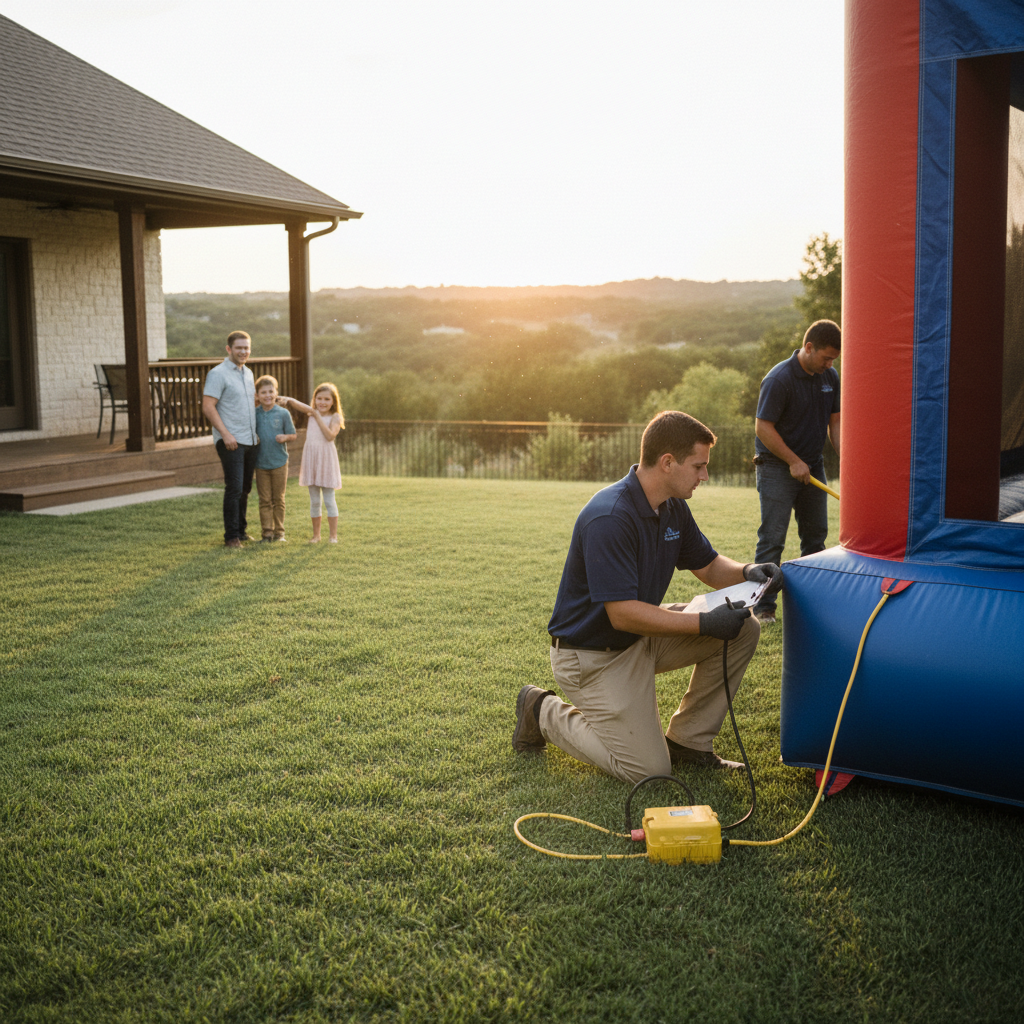
When I started Buda Bounce House Party Rentals, I quickly learned that the difference between a fun celebration and a disaster often comes down to one thing: the parent's ability to ask the right questions before signing a rental agreement. Most families focus on price and availability, but the smart party planners dig deeper. Here's what we've discovered after delivering to over 300 Central Texas events – the questions that separate professional operators from weekend warriors might surprise you.
The Legal Reality Check: What Your Insurance Actually Covers
Here's something most rental companies won't tell you: standard homeowner policies in Texas often exclude coverage for "amusement devices," "recreational vehicles," or "motorized vehicles" once they exceed certain weight limits or capabilities. While specific figures can vary, anecdotal evidence suggests that significant medical bills can arise from inadequate coverage for inflatable rentals.
The smart approach involves calling your insurance agent before booking any inflatable rental and asking three specific questions: Does my policy cover injuries on temporary amusement equipment? What's the weight or type threshold for coverage exclusions? [1] Do I need additional liability coverage for events with a specific number of attendees or children?
At Buda Bounce House Party Rentals, we carry $2 million in liability coverage specifically because we understand these gaps. However, our insurance doesn't replace your due diligence. Texas follows modified comparative negligence laws, meaning if poor supervision contributes to an injury, both parties can share liability regardless of equipment condition. [2]
The red flag to watch for: rental companies that can't immediately provide their Certificate of Insurance or seem evasive about coverage limits. Professional operators should have these documents ready and understand exactly how their coverage interacts with your homeowner policy.
[1] Insurance Information Institute: What Does Homeowners Insurance Cover? [2] Texas Civil Practice and Remedies Code Title 4, Chapter 33: Proportionate Responsibility
The Central Texas Weather Intelligence Test
Generic safety guides mention "high winds" but don't explain what that means for our specific climate. According to the National Weather Service Austin/San Antonio office, our area experiences wind gusts exceeding 25mph on average 45 days per year – well above the recommended 20mph threshold for most inflatables.

Smart parents ask rental companies: "How do you monitor real-time wind conditions during my event?" The answer reveals everything about their operational sophistication. Professional companies use weather apps that track hyperlocal conditions and have written protocols for shutdown procedures.
Our approach at Buda Bounce House Party Rentals involves checking conditions every 30 minutes during events and maintaining direct contact with hosts when weather changes. We've canceled or relocated 12 events this year due to sudden wind shifts – decisions that probably prevented serious injuries.
The dealbreaker response: "We'll check the forecast the day before." Weather in Central Texas changes faster than daily forecasts can predict, especially during spring storm season from March through May.
The Emergency Response Credential Audit
Most families never think to ask: "What happens if a child gets hurt on your equipment?" The response tells you whether you're dealing with seasoned professionals or part-time operators hoping nothing goes wrong.
Professional rental companies should have written emergency protocols that include: immediate injury assessment procedures, when to call 911 versus when to handle minor incidents, contact information for nearest pediatric urgent care facilities, and documentation requirements for insurance claims.
We maintain updated contact lists for pediatric facilities within 15 minutes of our service area – Dell Children's Medical Center in Austin, Ascension Seton Hays in Kyle, and CHRISTUS Central Texas St. Joseph in Bryan. This isn't paranoia; it's preparation based on understanding that inflatable bounce house injuries can lead to emergency department visits, particularly during warm weather months. Research indicates a significant number of injuries occur, with some studies showing increases during peak usage periods. Harvard Health Publishing notes that thousands of children are sent to the emergency room due to bounce house-related injuries annually.
The concerning answer: "Nothing bad has ever happened" or "That's what insurance is for." Both responses suggest they've never actually planned for medical emergencies, which means you'll be handling crisis management during what should be a celebration.
The Three-Generation Safety Protocol
Here's what generic safety guides miss: most Central Texas family events involve multiple adults with different comfort levels around children's activities. Grandparents, aunts, and family friends often have varying ideas about appropriate supervision, creating confusion during the event.
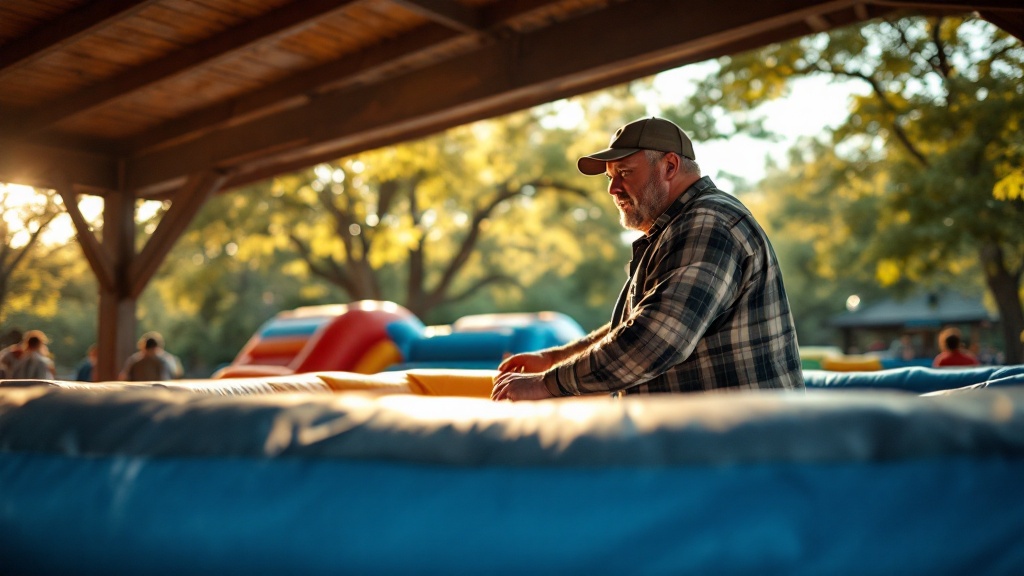
The solution involves establishing clear role assignments before setup begins. Designate one adult as the "Safety Captain" responsible for enforcing capacity limits and age separation. Assign a second adult as the "Weather Monitor" who tracks conditions and has authority to call for equipment shutdown. Other adults handle food service, photography, or general party management – but shouldn't override safety decisions.
At events we service, we always identify these roles with the primary contact during setup. This prevents the common scenario where multiple adults give conflicting instructions about equipment use, creating safety gaps and childhood frustration.
The framework works because it respects everyone's desire to help while maintaining clear decision-making authority. We've seen too many events where well-meaning relatives accidentally undermine safety protocols because nobody established ground rules in advance.
The Setup Day Environmental Assessment
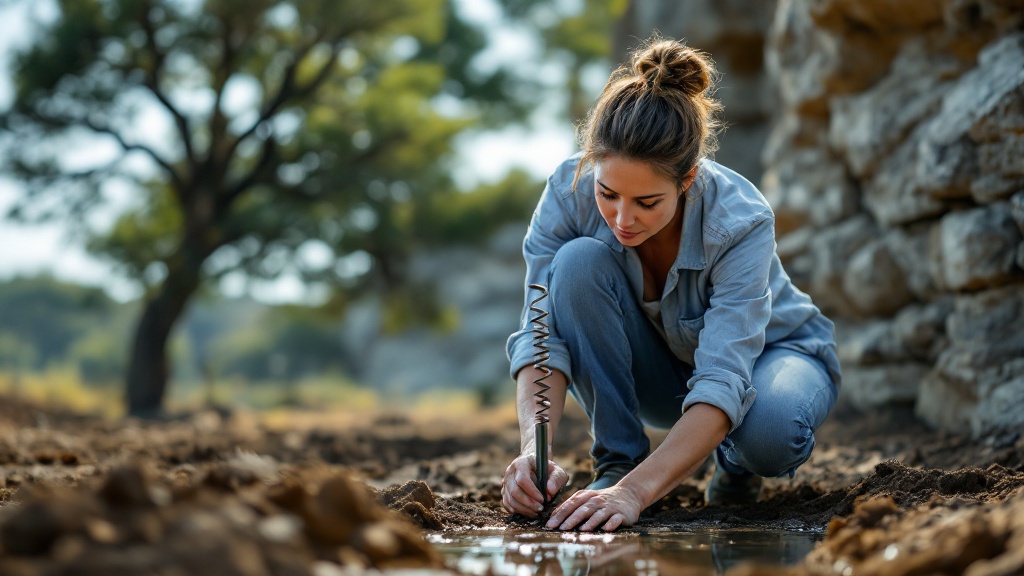
Central Texas soil conditions vary dramatically across our service area. The clay-heavy soils in Round Rock and Pflugerville require different anchoring strategies than the sandy compositions common in South Austin and Buda areas.
Professional setup teams should assess your specific property conditions and adjust their anchoring accordingly. This might mean bringing different stake lengths, using sandbags as backup anchors, or recommending alternative placement to account for slope variations.
Our team carries soil moisture meters because wet clay behaves completely differently than dry clay for anchoring purposes. We've learned this through experience – including one memorable event in Cedar Park where recent irrigation made standard stakes ineffective, requiring immediate anchoring modifications.
The space requirements extend beyond the inflatable's footprint. Safe operation requires 6-8 feet of clearance on all sides, plus consideration for electrical requirements. GFCI outlets aren't just recommended – they're required for outdoor inflatable operation under current electrical codes.
The Maintenance Record Investigation
Here's the question most parents never ask but should: "Can you show me your equipment maintenance logs?" Professional operators maintain detailed cleaning and inspection records for each piece of equipment.
These logs should document cleaning procedures between events, regular safety inspections, and any repairs or modifications. Equipment that sees heavy use requires more frequent inspection of high-stress areas like anchor points, seams, and entry/exit zones.
We maintain digital maintenance records accessible via QR codes attached to each piece of equipment. Parents can scan during setup to see the cleaning date, last safety inspection, and usage history. This transparency isn't just good business – it's evidence of systematic safety management.
The warning sign: companies that can't immediately produce maintenance documentation or seem surprised by the request. Equipment safety depends on regular inspection and maintenance, not just "it looks fine" visual checks.
Frequently Asked Questions
What insurance documentation should I request from rental companies?
Always ask for a current Certificate of Insurance showing general liability coverage of at least $1 million, plus specific coverage for inflatable equipment. The certificate should list your event date and location as additional covered activities. Professional companies provide this automatically.
How do I know if my yard is suitable for inflatable setup?
Measure the available space including required clearances – typically 6-8 feet beyond the equipment footprint. Check for overhead obstacles like tree branches or power lines. Ensure access to GFCI electrical outlets within 100 feet. The rental company should conduct a site assessment before event day.
What happens if weather conditions change during my event?
Professional rental companies have written weather policies specifying wind speed limits (usually 20-25mph), procedures for sudden storms, and protocols for equipment shutdown. Ask about their real-time weather monitoring methods and who has authority to make shutdown decisions.
Should I provide additional safety equipment beyond what's included?
Standard rentals should include proper anchoring and safety signage. Consider adding a basic first aid kit, shade structure for hot days, and hand sanitizer stations. The rental company should specify what safety equipment they provide versus what you need to supply.
How far in advance should I book inflatable rentals in Central Texas?
Peak season (March through October) requires 3-4 weeks advance booking for popular dates like weekends and holidays. This timeline also allows adequate time for insurance verification, site assessment, and weather contingency planning. Last-minute bookings often mean limited equipment choices and rushed safety preparations.
📅 Upcoming Events & Webinars
Stay updated with our latest Beyond the Bounce: Comprehensive Inflatable Safety Checklists for Central Texas Parents events, workshops, and industry insights.
View Our Calendar →Related Resources
- Buda Bounce House Party Rentals - Expert Resource
- Beyond the Bounce: Comprehensive Inflatable Safety Checklists for Central Texas Parents Data & Analysis
- Beyond the Bounce: Comprehensive Inflatable Safety Checklists for Central Texas Parents Presentation
- Buda Bounce House Party Rentals Official Page
- Beyond the Bounce: Comprehensive Inflatable Safety Checklists for Central Texas Parents Events
- Beyond the Bounce: Comprehensive Inflatable Safety Checklists for Central Texas Parents Resources
- Beyond the Bounce: Comprehensive Inflatable Safety Checklists for Central Texas Parents Blog Post
- Beyond the Bounce: Comprehensive Inflatable Safety Checklists for Central Texas Parents Professional Guide
- Beyond the Bounce: Comprehensive Inflatable Safety Checklists for Central Texas Parents Service Area Map

Comments
Post a Comment